


Page 32 - ISLA_SLReport_Aug2020_double
P. 32
from the better treatment for regulatory capital. Under
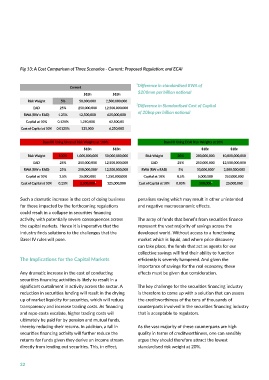
        Fig 13: A Cost Comparison of Three Scenarios - Current; Proposed Regulation; and ECAI
                                                                                                                                                   the previous 2010 GMSLA agreement,  if the borrower
                                                                                                                                                   is a financial institution, its claim on the lender for
                                                  ¹Difference in standardised RWA of                                                               the return of excess title-transfer collateral after a
                          Current
                                                  $200mm per billion notional                            [It is estimated] that the                liquidation of collateral is a risk-weighted asset (RWA)
                               $1Bn      $1Bn
           Risk Weight  5%   50,000,000  2,500,000,000                                                   savings possible by the                   for regulatory capital purposes, which requires an
                                                  ²Difference in Standardised Cost of Capital                                                      allocation of capital and therefore has an impact on the
             EAD      25%    250,000,000  12,500,000,000
                                                  of 20bsp per billion notional                          reduction of the cost                     borrower’s balance sheet.
          RWA (RW x EAD)  1.25%  12,500,000  625,000,000
          Capital at 10%  0.125%  1,250,000  62,500,00                                                   of capital from a 100%
                                                                                                         risk weight to a 20% risk                 segregated account with a third-party custodian, such
         Cost of Capital at 10%  0.0125%  125,000  6,250,000                                                                                       Under the Pledge GMSLA, collateral is transferred to a
                                                                                                         weight could be up to 2                   as a tri-party provider, in the name of the borrower
                Basel III Using Unrated Risk Weights at 100%  Basel III Using ECAI Risk Weights at 20%                                             (the “Secured Account”). This makes it the subject
                               $1Bn      $1Bn                            $1Bn       $1Bn                 million USD per notional 1                of the security interest in favour of the lender but
           Risk Weight  100%  1,000,000,000  50,000,000,000  Risk Weight  20%  200,000,000  10,000,000,000                                         segregates it from the lender’s assets and protects
             EAD      25%    250,000,000  12,500,000,000  EAD    25%   250,000,000  12,500,000,000       billion USD of exposure                   it from the risk of non-return on insolvency of the
          RWA (RW x EAD)  25%  250,000,000¹  12,500,000,000  RWA (RW x EAD)  5%  50,000,000¹  2,500,000,000                                        lender. As either the value of the collateral, or the
          Capital at 10%  2.5%  25,000,000  1,250,000,000  Capital at 10%  0.5%  5,000,000  250,000,000
                                                                                                                                                   value of the loaned securities fluctuates, transfers are
         Cost of Capital at 10%  0.25%  2,500,000²  125,000,000  Cost of Capital at 10%  0.05%  500,000²  25,000,000
                                                                                                                                                   made in and out of the Secured Account. However, if
                                                                                                         Addressing the Challenge                  the collateral is given by way of security, the borrower
        Such a dramatic increase in the cost of doing business   penalises saving which may result in other unintended                             retains a property interest in the collateral assets
        for those impacted by the forthcoming regulations   and negative macroeconomic effects.          The securities financing industry is certainly adaptive.   and is not exposed to the same risk of non-return of
        could result in a collapse in securities financing                                               There are two ways in which the industry is already   excess collateral by the lender. Therefore its return
        activity, with potentially severe consequences across   The array of funds that benefit from securities finance   adapting to address the oncoming challenge of Basel   does not carry such a risk weighting. The security
        the capital markets. Hence it is imperative that the   represent the vast majority of savings across the   IV today; a revised legal approach to collateralisation;   collateral arrangement is an attractive prospect for
        industry finds solutions to the challenges that the   developed world. Without access to a functioning   and the development of specialised Central Clearing   borrowers in particular.
        Basel IV rules will pose.                 market which is liquid, and where price discovery      Counterparts. Both have been under development
                                                  can take place, the funds that act as agents for our   for several years and are now becoming more widely
                                                  collective savings will find their ability to function   accepted. They will not solve the issue in its entirety -   Custodians and Sub-Custodians
        The Implications for the Capital Markets  efficiently is severely hampered. And given the        but they are making a difference.
                                                   importance of savings for the real economy, these                                               In order to successfully understand and mitigate the
        Any dramatic increase in the cost of conducting   effects must be given due consideration.                                                 impact of anything it makes logical sense to first measure
        securities financing activities is likely to result in a                                         Pledge GMSLA                              and manage it. The world of credit risk and capital
        significant curtailment in activity across the sector. A   The key challenge for the securities financing industry                         management are no exceptions and the involvement of
        reduction in securities lending will result in the drying   is therefore to come up with a solution that can assess   In November 2018 ISLA published the first market   custodians and sub-custodians in the pledge solution
        up of market liquidity for securities, which will reduce   the creditworthiness of the tens of thousands of   standard agreement to support the pledging of security,   does not remove the risk completely – it moves it and
        transparency and increase trading costs. As financing   counterparts involved in the securities financing industry   the Global Master Securities Lending Agreement   can also potentially reduce the capital at risk.
        and repo costs escalate, higher trading costs will   that is acceptable to regulators.           (Security Interest over Collateral) (the “Pledge
        ultimately be paid for by pension and mutual funds,                                              GSMLA”). This agreement provided for borrowers to   Prudent credit risk and capital managers will have
        thereby reducing their returns. In addition, a fall in   As the vast majority of these counterparts are high   transfer collateral to lenders by way of security interest   an understanding and knowledge of all of their
        securities financing activity will further reduce the   quality in terms of creditworthiness, one can sensibly   rather than an absolute transfer of title. The principal   counterparts and of the complex financial network of
        returns for funds given they derive an income stream   argue they should therefore attract the lowest   motivation behind the Pledge GMSLA is to enable   interconnectedness and interdependencies that they
        directly from lending out securities. This, in effect,   standardised risk weight at 20%.        borrowers to benefit from the cost savings available   are part of.


        32                                                                                                                                                                               33

