Search

CDM: The Road to Adoption

Introduction

The Common Domain Model (CDM) is an open-source model hosted by the Fintech Open-Source Foundation (FINOS). It is a standardised, machine readable, and machine-executable model that represents financial products, trades in those products, and the lifecycle events of those trades. The model delivers a standardised framework designed to enhance the efficiency and interoperability of financial services, particularly in the context of regulatory reporting and data management. As the CDM provides common definitions and structures for financial data and processes, it plays a crucial role in building resilience, reducing risks, and improving efficiency within financial markets and institutions.

Hosted by FINOS and developed through their Community Specification open governance process, the CDM is an open market standard available to all. Maintained by financial professionals and trade associations (ICMA, ISDA and ISLA), the standard is continually being expanded and improved by the financial community.


CDM: The Road to Adoption Published in February

Ahead of the 2025 Common Domain Model (CDM) Showcase held on 26 February 2025, ISLA published the "CDM: Road to Adoption" paper. The document outlines some of the ways the CDM can be utilised by the financial industry to improve, amongst other things, trade efficiency, regulatory compliance and collateral management. We believe that the use cases and benefits of the CDM described in this paper will help address much of the evolving landscape within securities lending and foster more effective and stable financial markets. The full report is available to download or review each of the key CDM use cases and benefits below.

1How the CDM Improves Financial Markets

Key Benefits

    Resilience

    Resilience

    By providing a freely available market standard for the representation of data and processes, the CDM reduces the risk of errors and discrepancies that can arise from using multiple formats and definitions for different purposes and different service providers. Institutions using the CDM are able to develop robust contingency frameworks to manage operational risk by ensuring that all third parties can access and utilise the same data effectively. In the event of a significant market disruption, institutions can more easily utilise alternative services or applications so as to minimise disruption to critical services. This substantially improves market resilience.

    Transparency

    Transparency

    Through standardised reporting frameworks, the CDM brings consistent transaction representation, thus removing ambiguity, and making it easier for financial institutions to adapt to and meet existing and new regulatory obligations. The open-source nature of the CDM also provides regulators with full transparency over the code and governance of the model.

    Operational Efficiency

    Operational Efficiency

    Using workflows native to the CDM, institutions can utilise the model’s data definitions and event functions to automate their processes, significantly reducing friction between systems and facilitating accelerated transaction processing. This standardisation and union of data, events and workflows within the CDM enhances interoperability between systems, which in turn promotes seamless data sharing and integration across different reporting regimes and all stakeholders.

    Data Quality

    Data Quality

    The machine-readable data and machine executable functions in the CDM remove all bias and ambiguity in the data. Data quality is still the number one issue for both regulators and market participants. Reporting using the CDM allows automated and accurate risk assessments to be performed, giving an improved understanding of risk exposure, enabling firms and regulators to make informed decisions faster and mitigate potential risks sooner.

01

/

05

2The CDM & Accelerated Settlement

Accelerated Settlement

As settlement cycles shorten, the need for uniform protocols becomes more and more apparent. Firms need to streamline their operations and upgrade their infrastructure and applications to be able to meet regulatory and market settlement requirements.

Discover more about the CDM & Accelerated Settlement by reading the full chapter article – please click the link below.

Find out more

3The CDM & Collateral

Harmonised Representation of Collateral

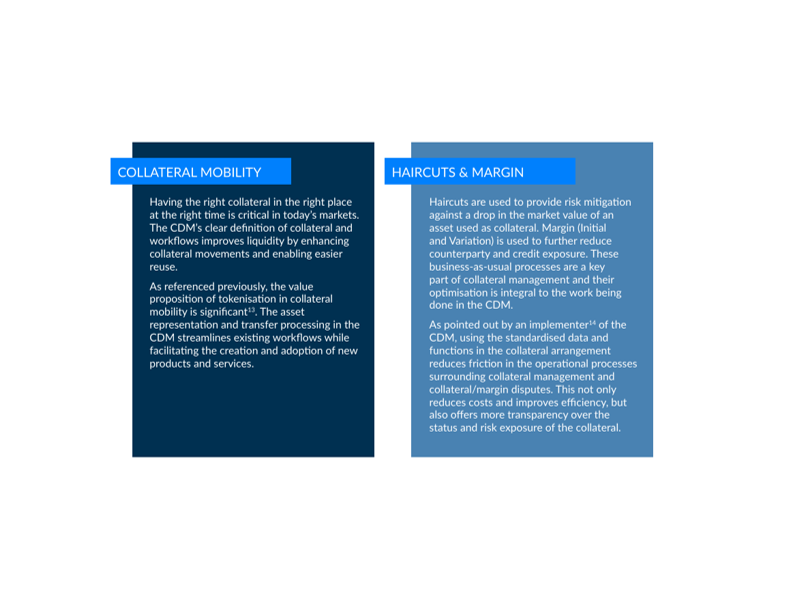
Collateral is used across the industry to support trading, payments, clearing and settlement, and yet every organisation manages and represents it differently, whether this is in a bi-lateral or tri-party arrangement. ISLA has been working in conjunction with other trade associations to harmonise the representation of collateral, enabling organisations to use the CDM for enterprise-wide collateral management.

Discover more about the CDM & Collateral by reading the full chapter article – please click the link below.

Find out more

4The CDM & Regulatory Reporting

Data Quality for Regulatory Reporting

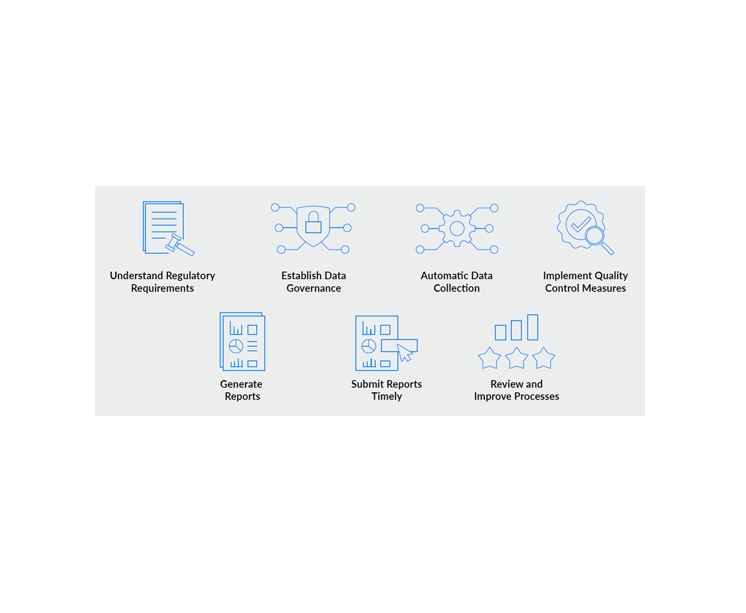
The criticality of reporting financial transactions to regulators cannot be understated. Without the timely and accurate delivery of data it would be impossible for policy makers to support market stability and integrity. As markets expand and new trading strategies emerge, regulators must retain visibility over market activities to facilitate the early identification of vulnerabilities and enforce the adoption of regulations to mitigate potential crises.

Discover more about the CDM & Regulatory Reporting by reading the full chapter article – please click the link below.

Find out more

Standard Representation for Legal Agreements

Multiple agreement types exist in the financial markets as conventions and practices in each domain vary. This has led to specialised agreements being required in order to align with each market’s standards and expectations. For example, securities lending is covered by the Global Master Securities Lending Agreement (GMSLA), repo by the Global Master Repo Agreement (GMRA) and derivatives by the ISDA Master.

Discover more about the CDM & Legal Documentation by reading the full chapter article – please click the link below.

Find out more

6The CDM & Pre-Trade

Optimisation of Pre-Trade Processing

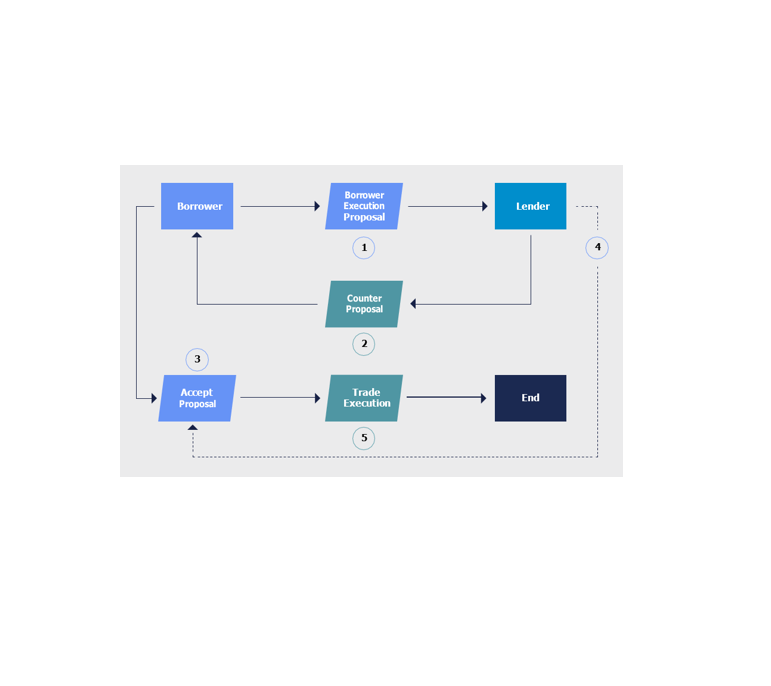
Pre-trade processing is a key part of the trade lifecycle. It can involve a large number of steps and processes, from credit assessment, compliance checking, capital allocation, liquidity assessment, as well as the actual trade negotiation, or order routing, trade affirmation and confirmation.

Discover more about the CDM & Pre-Trade by reading the full chapter article – please click the link below.

Find out more

Common Domain Model (CDM)

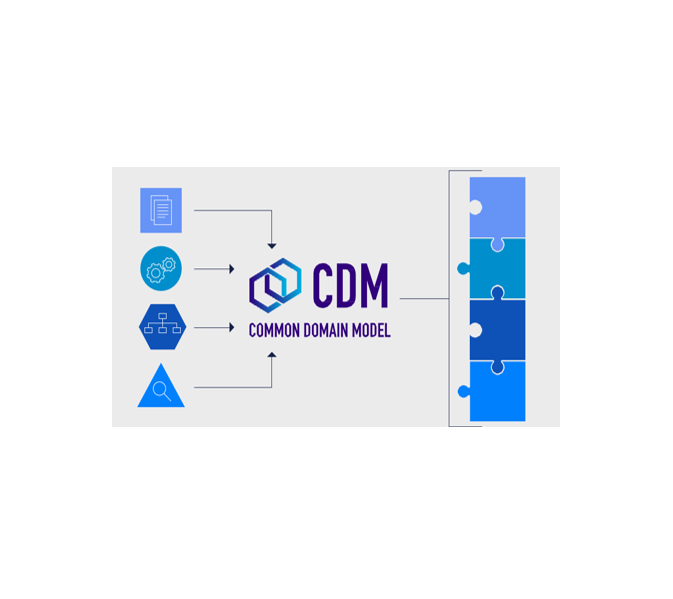
A Common Domain Model (CDM) aims to unify a series of actions, life cycle events and product definitions though the development of a single language or code. It has particular relevance in respect of post trade and life cycle events and may also be seen as the application of best practice within a codified framework. ISLA has been working with our members and other industry stakeholders, including other relevant industry associations to better understand how a CDM might best be applied to our markets and consider the broader ramifications of such developing technologies.

Find out more

Already a member? Login to your account

Interested in becoming a member?

ISLA’s members span the breadth and depth of the securities lending industry, and there are many benefits of joining the Association’s network.